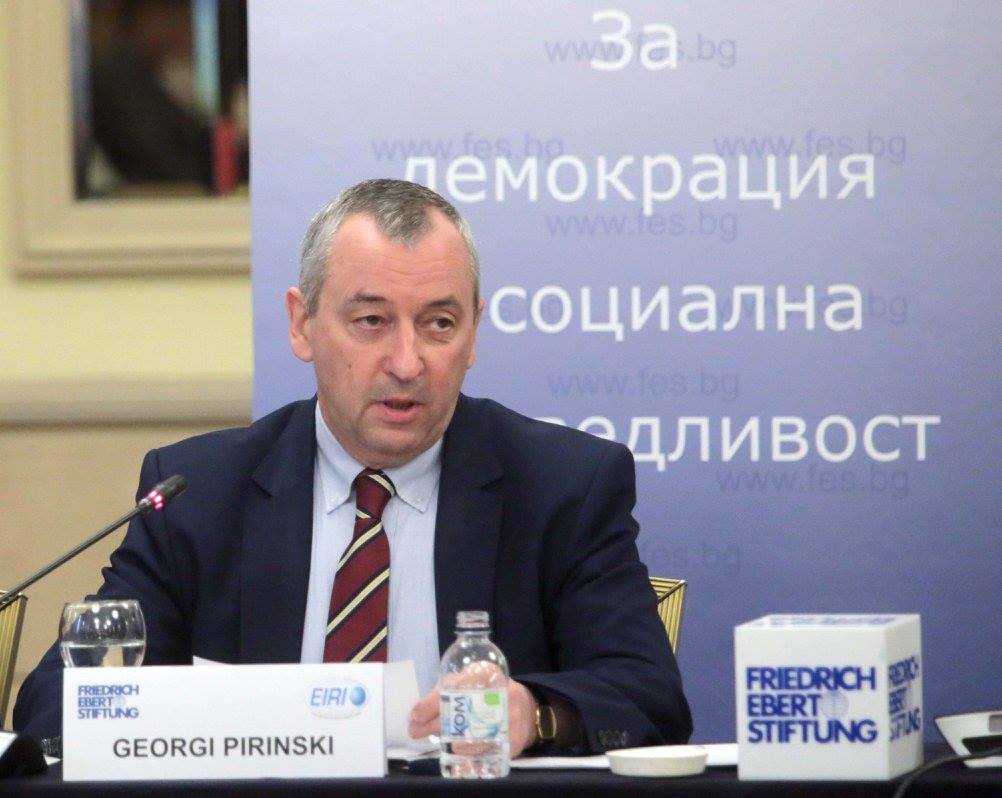
For the purposes of the discussion we might ask ourselves three overarching questions.
First – what is the context, within which to analyze our subject of discussion, referred to alternatively as the post-soviet space, the neighborhood and/or the region? Second– how are we to understand the underlying nature of the rivalries and conflicts that are playing out throughout it at present? And third – what should we do to replace continuing stress with increasing stability, security and cooperation?
Thus, first the context. Here is how the highly respected former governor of the Bank of England Mervin King describes what actually took place post-1989. As he states in his major recent book, “The End of Alchemy”, in 2008 the modern capitalist economic system collapsed. To understand why the crisis was so big and came as such a surprise, one must start at the key turning point – the fall of the Berlin Wall in 1989. Rather than simply marking the end of communism, or even “the end of history”, it in fact was also the beginning of the biggest crisis in capitalism since the Great Depression.
Why so? Because the countries of the former Soviet Union, together with China and India, embraced the international trading system, adding millions of workers and multiple volumes of tradable goods to the international economy. In China alone more than 70 million new manufacturing jobs were created over the past 25 years, far exceeding the 42 million working in manufacturing in the United States and Europe combined. These new developments translated into huge disequilibria between savings and spending within major economies, as well as equally severe external imbalances between countries. In these radically changed circumstances the inherited money and banking system turned out to be not the supposed pillar of stability, but rather the exact opposite – a kind of alchemy, the Achilles heel of capitalism.
Thus, King’s conclusion: correcting the internal and external imbalances will be a long process – the Great Unwinding. This will require deep real adjustments in the major economies and fundamental remaking the international institutions.
Taking the question of context one step further, it is useful to introduce the notion of The Silk Roads as viewed in present terms. A popular recent study of the same title has as its starting point the observation that for millennia it was the region lying between east and west, linking Europe with the Pacific Ocean that was actually the axis on which the globe spun. The half way point between east and west, running from the eastern Mediterranean and the Black Sea to the Himalayas might seem an unpromising position from which to assess the world today, since the countries in it are generally viewed as instable, with poor human rights records, with rulers winning impossibly large election majorities.
Yet this bridge between east and west lies at the very crossroads of civilization. Far from being on the fringe of global affairs, these countries lie at its very center – as they have done since the beginning or history. In former times, as the cultures, cities and peoples along the Silk Road traded and exchanged ideas, they learnt and borrowed from each other. As king Wu Ling of the kingdom of Zhao in north-eastern China observed some 2000 years ago: “a talent for following the ways of yesterday is not sufficient to improve the world of today”.
The mantle of progress however started to shift in the early modern period, beginning with the two great discoveries of Columbus and of Vasco da Gama in the 1490-ies that laid the ground for a major disruption of long standing rhythms of exchange. The rise of Europe sparked a fierce battle for power – and for control of the past. As the author of the book concludes, history was twisted and manipulated to create an insistent narrative where the rise of the west was not only natural and inevitable, but a continuation of what had gone before.
May we now turn to the second question in light of the above – how and what sense can we make of the stresses, the shocks and collisions permeating what we shall call the region, understanding in geopolitical terms the so-called Post-Soviet Space and in the broader civilizational context the Black Sea – Himalayas axis.
To start with, it seems evident that regarding the centers of global economic growth and exchange, by all accounts we are in the process of undergoing a new fundamental shift towards Asia of no less a magnitude than the one that gave preeminence to Europe and the west ever since the latter XV-th century. The fundamental rebalancing of the real global economy will be manifesting itself in the growing economic and commercial importance of rising powers such as China and India, together with Russia and the countries of Central and Southeast Asia. This in turn will require the refounding of the major international institutions governing the global economy and politics.
Such fundamental transformations inevitably give rise to defining conflicts of interests. The deep history-making shift that clearly is growing ever more evident is inevitably translating itself into new major rivalries of power and influence between the up to now dominant west and the new rising power centers of the east. These rivalries are clearly manifesting themselves in a series of confrontations, no less acute than in former times, for predominance throughout the expanse extending from the Baltic-to-Black Sea corridor, running further through the South Caucasus, the Middle East and Central Asia and reaching the Pacific Ocean.
The particular conflicts – both hot and frozen – that are at present playing out generally over this whole mega-region and in particular in its Baltic-to-Black Sea sector are the subject of intense study by analytical centers in all major states and alliances. In the course of this round-table discussion these issues will be the subject of presentations by eminently knowledgeable researchers and practitioners.
So let me just highlight some aspects of the on-going discussion of these conflicts that ought to be considered when trying to answer the question of how and what sense are we to make of them.
Above all, a defining argument has developed as to which principle should take first place – national security or the rule-of-law; an argument reformulated as a choice between going back to power politics or forward towards value-based international relations. In our region this divergence must be seen in the context of the basic power shifts that have taken place since 1989 with the dissolution of the economic and military alliances of the former European socialist countries and the parallel enlargement of the EU and the expansion of NATO into Central and Eastern Europe.
Initially seen as being accompanied with the institutionalization of a new partnership with the Russian Federation, with time the west was seen to engage in a policy of bringing the European Post-Soviet States “closer to the west”, that is – distancing them from Russia and increasingly isolating the latter from traditional partners. A most graphic example of this policy was the pressure applied to Ukraine to conclude the association agreement with the EU at the Vilnius summit of the eastern Partnership in November 2013. All this inevitably leading to increasing tensions and ever more deepening challenges and threats that both Russia and, by the way its neighbors as well, have come to see as existential threats to their very national security.
In fact there should be no real conflict between national security and democratic values – if one includes among the latter the value of good neighborliness. Freedom of choice must rest on enlightened self-interest as the indispensable underpinning for enduring security and advancement. This because freedom of choice itself in reality is no such thing as behavior with no concern whatsoever for the interests and concerns of those directly affected. Once this imperative balance has been breached, then the very basis for value-driven relations has been destroyed, with power politics the inevitable alternative coming into play.
This is actually what we have seen in the course of the ensuing three years with the armed conflict in Eastern Ukraine with its tragic loss of life and destruction, the inclusion of Crimea into the Russian federation and the ensuing major build-up of military power on the side of NATO from the Baltic into the Black Sea and the corresponding increase in Russian armed forces in the region. Together with sanctions and counter-sanctions that are further exacerbating tensions and inflicting increasing harm.
What actually is evidently taking place is the building up of a new line of confrontation, in a sense – moving the wall that in the Cold war era had run across the center of Europe to a new Baltic-Black Sea divide. In fact this can be seen as a manifestation of a new kind of containment philosophy. In the context of the global shifts outlined above, this dividing line can be seen as a major component of a new wall of containment of a rising east by a west unwilling to consider forging a new kind of relationship, taking into account the basic shifts in underlying economic and power realities.
And finally, having reached this point of severe confrontation, we must also recognize the fact that the degree of challenges has again brought to the fore the ever-present question of first-strike capability. While roughly a decade ago there were expectations for moving towards a nuclear-free world, today the topical issues are tactical nuclear weapons that can be used in a “limited” nuclear war, together with forward positioning of anti-missile facilities.
So to question number three – what is to be done? How can we devise an approach and strategy leading to the reversal of confrontation and to managed rebalancing and step-by-step cooperation? And as a sub-question – what should be the international position and the foreign policy of Bulgaria in this regard?
To begin with, if we take as point of reference the notion of “east of west and west of east” with Bulgaria squarely at the center of this “location”, we can reach two opposing conclusions. One is that this space represents a kind of grey zone with the countries from it destined to occupy a peripheral status vis-a-vis the centers of world power. There is however an opposing view which places Bulgaria squarely at the center of one of the nodes of the Black Sea – Pacific axis, thus potentially making it together with the adjacent countries a vital link between the reemerging east and the rebalancing west.
From these two opposing views two very different types of foreign policies emerge. Subscribing to the periphery perspective leads to a continuous apprehension “not to be left behind” and the corresponding repeated declarations of unconditional fidelity to Euro Atlantic values, institutions and policies. However, the alternative broader view translates into a quite different foreign policy stance, aiming to actively take part in the reshaping of regional and trans-regional relations from the position of a centrally located entity at the crossroads of the dominant long-term global economic and political transformations that are reshaping the world as we know it before our very eyes.
Of course the latter view must not lead to unrealistic mega visions of a role in international affairs way beyond the potential of a country like Bulgaria. Nor should it signify damaging membership in either the European Union or in NATO. Rather, it requires well thought-out initiatives and policy proposals that the country can raise within the alliances to which it belongs and addressed to the neighboring countries, which build upon the emerging new trade and investment routes and aim to provide a framework for constructive meeting of interests in place of continuing clashes and deepening rivalries.
Bulgaria already once was able to come up with just such a forward-looking initiative. I am of course referring to the initiation of the South East European Cooperation Process exactly 20 years ago, which was accepted as the genuine voice of the region in favor of peace and cooperation and as such was directly supported at the time by the EU, the US and Russia.
Today Bulgaria could consider the elaboration of a new initiative of this kind, this time focusing on the Black Sea as a new European macro-region to follow the already existing ones in the Baltics, along the Danube and the Adriatic-Ionian region. A number of important mutual advantages could follow from such a development:
- Building on the interests of the riparian regions bordering the Black Sea for economic advancement, including the development of the blue economy of the sea, active cooperation could develop with EU support which, besides the direct benefit that it would bring, could also contribute to lessening the tensions now dominating the region;
- As to the most important set of issues regarding energy resources and transition routes, such a macro-region could help integrate the diverging interests of suppliers, transit countries and end users into a network bringing together the evolving regional energy system of South Eastern Europe as part of the European Energy Union with the strategies of the major suppliers and carriers in the adjoining neighborhood;
- Further, such a macro region could provide a most important interface for a new departure in relations between the EU and the Eurasian Economic Union, thus placing the countries of the region in a win-win framework rather than facing them with an either-or choice;
- Finally, such a new regional framework would present a vitally important node for linking Europe with the new Silk Road superhighway evolving over the Asian landmass in line with the transformational shifts on the geopolitical scale.There is furthermore a window of opportunity, which should be actively exploited – this is the upcoming presidencies of the EU consecutively by Bulgaria in 2018 and of Rumania a year later. The two countries would be well advised to jointly elaborate and promote a well thought out concept and action plan for the transformation of the Black Sea as a European macro region – a most important framework for constructively combining the defining interests of both the countries of the region together with those of the major centers of world power.
Clearly, such an ambitious undertaking requires concerted joint effort with like-minded partners. One such partner clearly should be Romania as a fellow EU member with an active role in promoting Black Sea cooperation. Another directly interested and most valuable party ought to be Greece. Also the decades-long experience of the Organization of Black Sea Economic Cooperation should be put to full use.
There is furthermore a window of opportunity, which should be actively exploited – this is the upcoming presidencies of the EU consecutively by Bulgaria in 2018 and of Rumania a year later. The two countries would be well advised to jointly elaborate and promote a well thought out concept and action plan for the transformation of the Black Sea as a European macro region – a most important framework for constructively combining the defining interests of both the countries of the region together with those of the major centers of world power.
May our round table discussion that is to follow make a small but perceptible contribution to this worthy objective!
* Key-note speech at the Round Table Discussion “Neighborhood Under Stress” (The Post-Soviet States, EU, Bulgaria), part of the To The East Of The West And To The West Of The East? Debates, organized by the Economics and International Relations Institute and the Friedrich Ebert Foundation, September 19th, 2016, Sofia